The other day, I was having a conversation with several people about the rapidly evolving world of mobile health or mHealth. The phrase "mobile health" is becoming such a buzzword these days. I wonder if it's being integrated into medical school curricula. Medical students are being expected to carry a mobile device during their clinical rotations, but are they using these devices effectively? These days, almost every medical student and resident uses some type of mobile computing device. The majority of them are using smartphones, but we're definitely seeing more students and physicians carrying an iPad around. The netbook phenomenon isn't over given that these devices are so small and affordable.
So how are patients leveraging mobile computing resources to improve their health? Many of them are using mobile apps that are allowing them to manage their chronic conditions. Physicians have the opportunity to coach and counsel patients about the use of mobile technology, but are they equipped for such a task? Are most physicians even familiar with the types of mobile health resources that are out there? Over the next few months, I'll be writing about mobile health resources for the patient vs. those mobile health resources that are really geared for the health care provider.

Tuesday, June 29, 2010


Monday, June 28, 2010
Looking forward to reviewing a new convertible tablet PC
I'm looking forward to receiving a convertible tablet PC so that I can review it and blog about my first impressions. I don't want to give away the details, so you'll have to stay tuned.
By means of background, let me list a few of the convertible tablet PCs I've used/owned:
By means of background, let me list a few of the convertible tablet PCs I've used/owned:
- HP EliteBook 2730p tablet PC
- Lenovo ThinkPad X200 tablet PC
- Lenovo ThinkPad X41 tablet PC
- Fujitsu Lifebook P1610 tablet PC
- Fujitsu LifeBook T3010 tablet PC
- It would have a 12" or 13" screen offering dual-input modes (a Wacom active digitizer and a capacitive multi-touch touchscreen)
- It would be as thin and light as a MacBook Air (but it would have a removable battery). Maybe as thin and light as a ThinkPad X300.
- It would have a full-size keyboard like that found on the Lenovo ThinkPad
- It would have an illuminated keyboard (or at least have a pop-out LED light like that found on the HP EliteBook)
- It would have a dual-input screen that includes a Wacom active digitizer and a capacitive touch-screen
- It would weigh less than 3.5 pounds
Friday, June 25, 2010
Mobile Health on Google and Yahoo
What happens if you type "mobile health" into Google or Yahoo? You'll see a variety of websites come up on the first page, including MobileHealthComputing.com.
Now, I wonder how many people out there are typing "mobile health" into search engines? What are they looking for? If you ask the average consumer to define "mobile health," I think most of them would struggle. Are you referring to a mobile health clinic? A hospital on wheels? A mobile hospital?
I doubt that your average consumer is thinking about the application of mobile technology in the world of health care. That trend is slowly changing and mobile devices like the Apple iPad and other tablets are going to change that as more health and medical apps continue to show up for these devices. Smartphones are also changing the world of health care as consumers and health care professionals leverage these mobile devices to record and retrieve information.
So, I predict that more people will be looking for "mobile health" resources on the Internet. They'll be using search engines like Google and Yahoo to research information about mobile health or mHealth. Right now, if you type "mHealth" into a search engine, you'll be flooded by websites that are mainly mHealth conferences around the globe. Speaking of mHealth, I hope to see you at the 2nd International mHealth Networking Conference (http://www.mobih.org/), by the mHealth Initiative Inc (mHI).
Now, I wonder how many people out there are typing "mobile health" into search engines? What are they looking for? If you ask the average consumer to define "mobile health," I think most of them would struggle. Are you referring to a mobile health clinic? A hospital on wheels? A mobile hospital?
I doubt that your average consumer is thinking about the application of mobile technology in the world of health care. That trend is slowly changing and mobile devices like the Apple iPad and other tablets are going to change that as more health and medical apps continue to show up for these devices. Smartphones are also changing the world of health care as consumers and health care professionals leverage these mobile devices to record and retrieve information.
So, I predict that more people will be looking for "mobile health" resources on the Internet. They'll be using search engines like Google and Yahoo to research information about mobile health or mHealth. Right now, if you type "mHealth" into a search engine, you'll be flooded by websites that are mainly mHealth conferences around the globe. Speaking of mHealth, I hope to see you at the 2nd International mHealth Networking Conference (http://www.mobih.org/), by the mHealth Initiative Inc (mHI).
Thursday, June 24, 2010
Save on the Lenovo IdeaPad U550
 If you're thinking about buying a new laptop this summer, here is a great Lenovo deal on the IdeaPad U550:
$250 off IdeaPad U550! eCoupon: USPU5621
Wednesday, June 23, 2010
Microsoft Office 2007 vs. 2010
I'm still running Office 2007, but I plan to upgrade to 2010. If you purchase Office Home and Student 2010, then you'll get Word, Excel, PowerPoint, and OneNote.
If you purchase the Home and Student version, you'll get to install this on 3 home computers. That's right! It is licensed for installation of either version on up to 3 computers.* (don't confuse this version with the Home and Business version - which only works on 1 computer)
*Licensed for installation on up to three home PCs. Not for use in any commercial, nonprofit, or revenue generating business activities, or by any government organization. The license designation for this product when purchased from the Microsoft Store Online is FPP and the Retail License Terms apply to that purchase.If you need Outlook 2010, then you'll need to buy either Office 2010 Home and Business or Office 2010 Professional. So, are you ready to upgrade? How many of you are still using a really old version of Microsoft Office?
Tuesday, June 22, 2010
World Congress 2nd Annual Leadership Summit on mHealth
Just when you think you can't keep up with all the mHealth conferences this year, there's another one I'd like to highlight. This one is the "World Congress 2nd Annual Leadership Summit on mHealth" and it's in my favorite city: Boston.

Here's a description:
Here's a description:
The World Congress is pleased to announce its 2nd Annual Leadership Summit on mHealth. The purpose of this conference is to provide the emerging mHealth eco-system (i.e. providers, payers, policy-makers, device manufacturers and telecomm carriers) with insight into the clinical efficiencies and business opportunities for integrating mobile technologies into the care delivery model.You can learn more about this event here.
The technology is maturing. The infrastructure is in place. Consumer interest and demand is on the increase and the outcomes-based case for mHealth is growing. So if widespread adoption is to occur, the current fee-for-service reimbursement system needs adjustment or new payment models must be created that incent providers toward adoption. For some time now, the industry has identified the business model issue as the sticking point -- Who will pay for mHealth?
Monday, June 21, 2010
When will mobile Internet surpass desktop Internet?
Many analysts are predicting that the majority of people will access the Internet using mobile technology instead of a desktop computer. I think we're going to see desktops go away and they're going to get replaced by notebooks and other small computers. After all, we should be doing everything we can to reduce and eliminate electronic waste or e-waste.
We'll always want large (or multiple) monitors when we're working. The mobile device will never be a substitute for a large screen. However, we're going to get more accustomed to accessing information on a small screen. Also, we're seeing a convergence of smartphones and tablets into devices like the Apple iPad.
So, what does the future look like? It definitely looks like we'll have much more mobile technology in our lives.
We'll always want large (or multiple) monitors when we're working. The mobile device will never be a substitute for a large screen. However, we're going to get more accustomed to accessing information on a small screen. Also, we're seeing a convergence of smartphones and tablets into devices like the Apple iPad.
So, what does the future look like? It definitely looks like we'll have much more mobile technology in our lives.
Friday, June 18, 2010
Tablets will cannibalize netbooks, outselling netbooks starting in 2012.
Here's an interesting line from Sarah Rotman Epps's blog. (she's an analyst at Forrester Research, Inc.)
According to their data:
It should be interesting to follow computer selling trends over the next few years. As people (including physicians) get comfortable with mobile devices, these mobile gadgets will become ubiquitous. In fact, we will become so dependent on them, that we'll have them everywhere. Right now, people have grown so dependent on their smartphones that if they leave their homes without their smartphone, they feel naked. Will that also happen with larger mobile devices like slate tablets like the Apple iPad?
- Tablets will cannibalize netbooks, outselling netbooks starting in 2012.
According to their data:
- Over the next five years, PC unit sales across all form factors will increase by 52%.
- US consumers will buy more PCs in 2015 than they do in 2010.
- Growth will come from new form factors like tablets, but laptop sales will increase steadily also.
- In 2015, 23% of all PCs sold to consumers in the US will be tablets.
It should be interesting to follow computer selling trends over the next few years. As people (including physicians) get comfortable with mobile devices, these mobile gadgets will become ubiquitous. In fact, we will become so dependent on them, that we'll have them everywhere. Right now, people have grown so dependent on their smartphones that if they leave their homes without their smartphone, they feel naked. Will that also happen with larger mobile devices like slate tablets like the Apple iPad?
Thursday, June 17, 2010
The Slate Tablet Revolution
Here's a link to my Mobile Medical Minute piece on ReachMD:
http://www.reachmd.com/xmsegment.aspx?sid=5633

A few years ago, industry experts predicted that doctors would trade in paper records and desktop computers for slate tablet computers. It didn't catch on. But the Apple iPad has re-ignited those predictions— and this time, the revolution, says Dr. Joseph Kim, author of the blog MedicalSmartphones.com, is likely.
http://www.reachmd.com/xmsegment.aspx?sid=5633
A few years ago, industry experts predicted that doctors would trade in paper records and desktop computers for slate tablet computers. It didn't catch on. But the Apple iPad has re-ignited those predictions— and this time, the revolution, says Dr. Joseph Kim, author of the blog MedicalSmartphones.com, is likely.
Wednesday, June 16, 2010
Microsoft Office 2010 is now available
 I bet some of you are still running Microsoft Office XP or 2003. Even though Office 2007 came out a few years ago, you probably didn't upgrade. After all, do you really need the latest version if you can still open all the files and get your work done?
Microsoft has released its 2010 version of Office. Do you plan to upgrade?
If you just got a new computer, make sure to read this:
Here's a common situation: You buy a new PC. You have an old version of Office (say 2003) and you also have the upgrade disk (say 2007). Do you need to install 2003, and then run the 2007 upgrade? No.
Here's a tip: You don't need to install the old version. Simply install the upgrade disk first. It will ask whether you have the old disk. Then, insert the old disk, and once it confirms that you have the old disk, then it will ask for the upgrade disk and you can install your upgraded version of Office.
If you're running the beta version of Office 2010, that version will expire in October 2010. Here are the common versions of Office 2010 you can purchase:
- Office Home and Student 2010 $149.99
- Office Home and Business 2010 $279.99
- Office Professional 2010 $499.99
Tuesday, June 15, 2010
Free Wi-Fi coming to all Starbucks
 If you're a medical student and you're looking for a nice place to study, then maybe it's time to head to your local Starbucks. Starting July 1, Starbucks will be providing free Wi-Fi to all customers. That's right. So, if you're a poor medical student unable to afford a Wi-Fi connection fee, then you don't have to worry about paying for the Internet.
Studying for the Boards? Preparing for your recertification exams? Grab your laptop (or tablet or netbook or iPad) and get away from your distractions. I'm not even a coffee drinker (but they do serve hot tea, so you'll find me drinking Tazo green tea).
Monday, June 14, 2010
Will digital pads and slates replace the netbook trend?
When the first netbooks arrived in the United States, most of us probably thought they were toys. The Asus Eee made with white plastic looked like a toy laptop. I don't think anyone really took it seriously. However, when HP, Lenovo, and other major manufacturers started selling professional netbooks, then the world jumped on this trend because now you could have a super-light, super-compact notebook for $300-400 and take this as your travel companion.
Will the digital slate (or digital pad) replace the netbook trend? People are still too dependent on keyboards. That's the problem. Once we get more accustomed to touch-based computing and voice recognition, then I think we'll see a shift away from keyboard-based computers. Right now, the majority of ultra-compact mobile devices are not capable of robust voice recognition or text-to-speech capabilities. As a result, we're not seeing a huge movement towards voice-based computing. I think that's going to be the next major phenomenon after touch-based computing. Once we're comfortable with touch (and multi-touch gestures), then we'll adapt voice computing.
In order for voice computing to become a mainstream reality, we need mobile computers that have very fast processors but that are also highly energy-efficient. Right now, we're still playing the balancing game where we often give up performance to gain battery life.
So, although devices like the Apple iPad and slates running Android or webOS will be extremely popular, we're still going to see the majority of people still hanging on to their keyboards. That's OK for now. Most of these slates will connect to a keyboard, but soon those keyboards will truly become obsolete.
Will the digital slate (or digital pad) replace the netbook trend? People are still too dependent on keyboards. That's the problem. Once we get more accustomed to touch-based computing and voice recognition, then I think we'll see a shift away from keyboard-based computers. Right now, the majority of ultra-compact mobile devices are not capable of robust voice recognition or text-to-speech capabilities. As a result, we're not seeing a huge movement towards voice-based computing. I think that's going to be the next major phenomenon after touch-based computing. Once we're comfortable with touch (and multi-touch gestures), then we'll adapt voice computing.
In order for voice computing to become a mainstream reality, we need mobile computers that have very fast processors but that are also highly energy-efficient. Right now, we're still playing the balancing game where we often give up performance to gain battery life.
So, although devices like the Apple iPad and slates running Android or webOS will be extremely popular, we're still going to see the majority of people still hanging on to their keyboards. That's OK for now. Most of these slates will connect to a keyboard, but soon those keyboards will truly become obsolete.
Sunday, June 13, 2010
The ThinkPad X100e is ultraportable and less than $500

You can get a new Lenovo ThinkPad X100e for less than $500, so if you're looking for a professional ultraportable laptop, this could be the right one for you. This isn't your typical netbook either. Here's what you get:
ThinkPad X100e key features
- Sub-3 lbs. starting weight
- Small footprint
- Roomy 11.6" HD display
- Available in Midnight Black and Heatwave Red in smooth finishes (Arctic White not available in the US)
- ISO full-sized, spill-resistant keyboard
- TrackPoint® and multitouch touchpad
- Powerful AMD processor
- Low-light-sensitive Web camera
- Multiple connectivity options
- ThinkVantage® Technologies
- Corporate OS support
- Robust warranty options
- 3 USB ports (1 powered), 4-in-1 media card reader and HD audio
View all Lenovo laptops and netbooks under $650!
Thursday, June 10, 2010
2010 mHealth Summit: Call for Presentations and Demonstrations
The Foundation for NIH, the mHealth Alliance and the National Institutes of Health are calling for presentations and abstracts for the 2010 mHealth Summit, to be held November 8-10, at the Walter E. Washington Convention Center in Washington, D.C.
The three-day summit brings together leaders in government, private sector/industry, academia and not-for-profit organizations to share information and experiences that address the challenges and opportunities at the intersection of mobile technology, health research and policy, with a view toward advancing work to reach the health-related UN Millennium Development Goals.
To learn more about guidelines, submission criteria and process please visit: http://www.mhealthsummit.org
The three-day summit brings together leaders in government, private sector/industry, academia and not-for-profit organizations to share information and experiences that address the challenges and opportunities at the intersection of mobile technology, health research and policy, with a view toward advancing work to reach the health-related UN Millennium Development Goals.
To learn more about guidelines, submission criteria and process please visit: http://www.mhealthsummit.org
Wednesday, June 9, 2010
Practice Fusion and Dell to Provide Doctors Affordable Electronic Medical Record (EMR) Package
 Earlier this week, Practice Fusion announced:
Practice Fusion and Dell to Provide Doctors Affordable Electronic Medical Record (EMR) Package
So, what types of packages are we talking about here?
- If you're in a solo practice: a Dell Latitude XT2 tablet PC plus a Vostro 230 desktop.
- If you're in a 2 provider practice: 2 Vostro 13" laptops and 2 Vostro 230 desktops
- If you're in a 4 provider practice, 4 Vostro 13" laptops and 3 Vostro 230 desktops
Click here to view the Practice Fusion EHR + Dell computer packages.
Tuesday, June 8, 2010
Are you still running Windows XP in your office?
If you're still running Windows XP, you should know that Support for Windows XP with Service Pack 2 (SP2) will end on July 13, 2010. You really ought to have Service Pack 3 (SP3) if you're running Windows XP. On April 8, 2014, support for all versions of Windows XP will end.
Do you think you'll still be running Windows XP in 2014?
Do you think you'll still be running Windows XP in 2014?
Mobile health = wireless health
Everything is wireless these days. Laptops all have built-in wireless communication capabilities (WiFi, Bluetooth, WWAN, etc.). Almost everyone carries a mobile phone. We're living in a wireless world where people expect to retrieve information instantaneously and where we have access to vital pieces of health data at our fingertips. Are physicians and other health care professionals effectively leveraging wireless technologies to improve the delivery of health care? We all know that the mobile health or m-Health phenomenon relies heavily on wireless communication. Soon, every household will have a dozen home medical devices that all communicate via wireless signals. They will consolidate data into a computer that sits in the home where patients can see their information, communicate with doctors and other health care professionals, and monitor their health via mobile health computing technology.
As wireless technology becomes more integrated into our daily lives, how will we keep up with the information overload that occurs as we get bombarded with e-mails, text messages, and other forms of digital data? Will patients visit their doctors with a wireless pad (like an Apple iPad) so that they're ready to take notes, look up health information, and even challenge their doctors when they doubt the advice they're receiving? How would you like it if your patient was busy typing away and searching the Internet as you were trying to counsel them about disease self-management strategies? Given that mobile computers and wireless technology is ubiquitous, this is unavoidable. Your patient may look something up when you leave the room by pulling out a smartphone and opening up a mobile web browser. Are you ready to face sophisticated consumers who are constantly trying to stay current on the latest health information that's out there?
As wireless technology becomes more integrated into our daily lives, how will we keep up with the information overload that occurs as we get bombarded with e-mails, text messages, and other forms of digital data? Will patients visit their doctors with a wireless pad (like an Apple iPad) so that they're ready to take notes, look up health information, and even challenge their doctors when they doubt the advice they're receiving? How would you like it if your patient was busy typing away and searching the Internet as you were trying to counsel them about disease self-management strategies? Given that mobile computers and wireless technology is ubiquitous, this is unavoidable. Your patient may look something up when you leave the room by pulling out a smartphone and opening up a mobile web browser. Are you ready to face sophisticated consumers who are constantly trying to stay current on the latest health information that's out there?
Friday, June 4, 2010
Intel® My WiFi Technology

Transforms your laptop into a Wi-Fi Personal Area Network
What it is
- A driver and application that doubles the capability of the laptop's WiFi adapter
- An industry first—creating a new, full Intel® My WiFi Personal Area Network inside a laptop—like your own portable Wi-Fi router
- Eight personal Wi-Fi Certified* devices can be directly connected to your laptop, while the laptop is simultaneously connected to the Internet
Why it's compelling—the totally sleek mobile PC!
- Connect anywhere and anytime to your devices—coffee shop, bus, train
- Wirelessly exchange files with a friend's laptop without a USB key
- Transfer photos wirelessly to your laptop—just turn on the camera
- Even remotely control your mouse or iTunes* with an iPhone* application
- Easy to use, and no dongles
Thursday, June 3, 2010
HP webOS slates and other multimedia devices
When HP purchased Palm, they weren't planning on expanding their iPaq line of smartphones. They were interested in putting webOS on slate tablets and other mobile multimedia devices. We're about to see an explosion of slates over the next 6 months as various manufacturers release multimedia devices that will compete against the Apple iPad.
It's going to be an interesting war among the slates. Major smartphone operating systems like Apple iPhone and Google Android will now be facing some still competition from HP webOS. Will BlackBerry also jump into the slate tablet industry? I think it's fair to predict that Microsoft will come up with something in the future (but right now we're waiting for them to release Windows Phone 7 for their smartphones).
Speaking of smartphones, I doubt we'll see a Palm Pre 2 or a Palm Pixi 2 made by HP. If anything, maybe we'll see some iPaq smartphones running webOS. The Compaq iPaq was one of my first major PDAs. I still remember carrying that large color-screen device.
It's going to be an interesting war among the slates. Major smartphone operating systems like Apple iPhone and Google Android will now be facing some still competition from HP webOS. Will BlackBerry also jump into the slate tablet industry? I think it's fair to predict that Microsoft will come up with something in the future (but right now we're waiting for them to release Windows Phone 7 for their smartphones).
Speaking of smartphones, I doubt we'll see a Palm Pre 2 or a Palm Pixi 2 made by HP. If anything, maybe we'll see some iPaq smartphones running webOS. The Compaq iPaq was one of my first major PDAs. I still remember carrying that large color-screen device.
Save on ThinkPads (coupon codes)
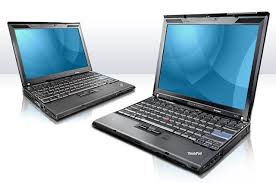 If you're planning on buying a new Lenovo ThinkPad, make sure to leverage these coupon codes to maximize your savings:
- Save 15% more on ThinkPad X201 12.1" ultraportable laptops! eCoupon: USPLENOVODEALS4
- Save 15% more on ThinkPad T410s 14.1" ultraportable laptops! eCoupon: USPLENOVODEALS4
- Save 10% more on ThinkPad X100e 11.6" ultraportable ! eCoupon: USPLENOVODEALS4
- Save 15% more on ThinkPad W510 15" mobile workstation ! eCoupon: USPLENOVODEALS4
So, whether you're shopping for dad or for a grad, make sure to use these coupon codes if you're going to buy a ThinkPad.
Wednesday, June 2, 2010
Motion Announces the New C5v and F5v Rugged Tablet PCs

Features and Benefits include (on the F5v):
- 50% improvement in performance
- Approx 30% increase in battery life
- Intel® Core™ i5 and i7 vPro™ processors
- Increased storage capacity and memory
- Display now standard with Gorilla glass for up to 4 times the strength in breakage resistance
- Hot swappable battery
- Web camera and 3MP documentation camera
Tuesday, June 1, 2010
ASUS Eee Pad coming soon

Is the hybrid form factor the way of the future? Will all slates include a detachable keyboard docking station that doubles as a notebook base? Will future slates be designed to function more like a full PC vs. a mobile multimedia/reader device?
Subscribe to:
Posts (Atom)