Showing posts with label privacy. Show all posts

Tuesday, June 25, 2013

Don't miss this mHealth webinar on Security & Privacy with @harrygreenspun

Don't miss this Fierce Fastcast Webinar: Are Your Security & Privacy Functions Prepared to Fully Leverage mHealth and Connect Data with Your Consumers?

Date: June 27, 2013 | Time: 2 pm ET / 11 am PT | Duration: 30 minutes

Learn how health reform transformation is changing security and privacy in health care and how it may impact your organization's approach today and tomorrow. Hear from Deloitte's top thought leaders on how the transformation of health care has significant implications for an organization's security and privacy.

Speakers:
  • Harry Greenspun, M.D., Senior Advisor, Health Care Transformation & Technology, Deloitte Center for Health Solutions
  • Mark Ford, Principal, Deloitte & Touche LLP
You can register for this webinar here.

Wednesday, January 2, 2013

Another unencrypted hospital laptop gets stolen (and compromises information on 29,000 patients)

Isn't it hard to believe that hospitals are still using unencrypted laptops that contain personal health information (PHI). Most enterprise-level laptops come with fairly robust encryption solutions these days. But, if you're still using an older laptop running Windows XP, your data may not be encrypted.

According to this story on Healthcare IT News, Gibson General Hospital in southwest Indiana reported a data breach that affected 29,000 patients when a hospital laptop was stolen from an employee's home.

Tuesday, December 11, 2012

Discussing BYOD and BYOx here at #DellWorld

Here at Dell World 2012, there was a lively discussion about BYOD, BYOx, and mobility this morning. What's the difference between BYOD vs. BYOx? Well, the "x" in BYOx represents applications, content, and other elements that go beyond the device. In other words, enterprise applications can be available on any device through robust cloud-based platforms. So, there are overlapping themes between BYOD and BYOx, but they're not the same.

We all know that we're seeing so many mobile devices entering the workplace. Mobile operating systems like iOS and Android are becoming ubiquitous in the medical workplace. I speak with physicians and medical students all the time who want to know how they can use their personal mobile device in the healthcare setting without risking security breaches around patient privacy. They're using their personal smartphones to take photos of patient rashes. They're using their iPads for remote desktop access to their office PCs running an EHR.

Here are some interesting stats to consider:
  • College grads today have grown up with the Internet throughout their entire lives. Generation Y, also known as the Millennial Generation, represent the mobile generation.
  • Over $7 million of lost mobile phones are lost each day (the actual $ is probably actually bigger). What type of corporate data breach do these lost phones represent?
  • Today's employees are accessing personal and corporate files on their own devices. What's the risk associated with this type of behavior when you mix personal and corporate cloud-based services? 
It's troubling that many organizations don't have mobile device policies in place today. This is especially true when you look at small medical practices, private medical offices, and even multi-specialty medical groups.  Doctors, nurses, and students are all bringing their own devices into the medical workplace. They're accessing files in the corporate cloud as well as in their personal cloud (personal content). Dell Wyse PocketCloud is an example of a personal cloud solution. The Dell Kace K3000 Mobile Management Appliance is an example of a mobile device solution that delivers robust features and capabilities. Here at Dell World, these solutions will be showcased on the exhibit floor.

Dell's approach to BYOD involves 3 key elements: 1) Define; 2) Protect; and 3) Empower while having a solid foundation that supports the evolving workforce.

Thursday, February 23, 2012

Mobile Devices Roundtable: Safeguarding Health Information

Mobile Devices Roundtable: Safeguarding Health Information
Real World Usages and Real World Privacy & Security Practices

Friday, March 16, 2012, 8:30 a.m. – 12:30 p.m. EDT

Location

Hubert H. Humphrey Building
U.S. Department of Health and Human Services – Great Hall
200 Independence Avenue, S.W., Washington, DC

Or via webcast: http://www.healthit.gov/mobiledevicesroundtable

The Roundtable will include three panels comprised of federal agency representatives, practicing providers, and representatives of research, provider and industry organizations. The event will be an interactive discussion with moderators encouraging interaction between the panelists and the audience. Questions will be accepted in person, through email, and via Twitter.

The Roundtable event is free and open to the public, through in-person or webcast participation, but you need to register online.

Registration for in-person attendance is limited. Upon entering the Hubert H. Humphrey Building, attendees are required to provide valid form of government-issued identification with a photo (e.g., current driver’s license or passport) to attend the event.

Visit www.healthit.gov/mobiledevicesroundtable for additional information.

Monday, May 31, 2010

iPads are everywhere

Does it seem like everyone has an iPad? OK, maybe not everyone. But, you can be sure that if you go to a crowded place (like a bookstore, a coffee shop, or an airport), you'll definitely find people who are using iPads.  Over the weekend, I was traveling and it seemed like every other passenger on the plane had an iPad.

How about the hospital? Have iPads been showing up in your health care organization? Will the iPad be a safe and secure way for patients to manage their health information? Do you have patients waiting in the waiting room, reading a book on the iPad? Maybe they're playing Scrabble or an action game. Maybe they're actually researching their health condition and learning more about disease self management.

Physicians have a unique opportunity to leverage multimedia and teach patients by using devices like the iPad. If a patient already owns an iPad, then it may become that much easier to use the device and teach the individual about specific health condition. Make sure to be sensitive about patient privacy. You wouldn't want do direct your patient to a web page about STDs and have someone else mistakenly turn on that iPad to find a website about HIV or syphilis.

Speaking of iPads, I've been holding off on buying one because I'm waiting for the 2nd generation model. However, I'm not sure that I can wait given that we're going to see several other slate tablets this summer and fall (like the HP Slate running webOS and Android slates made by Dell, Lenovo, and others).

Friday, April 24, 2009

Falling Hard Drive Prices


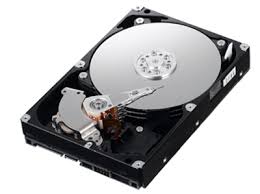
It's amazing to see how hard drive (HD) prices are falling these days. I remember when these things used to cost much more. Now, you can get a Toshiba 120 GB 2.5" laptop hard drive for $35! I've upgraded countless machines with bigger, faster hard drives. You can also use that old HD for external storage. However, make sure that if you upgrade your computer's HD, make sure you wipe it clean because hackers may retrieve your sensitive data. Technology is quite sophisticated these days. Remember that formatting your HD doesn't wipe it clean. If your HD contains patient data, then I suggest you drill a hole through it so that there's no way that anyone could ever harvest that sensitive information. Data security must be your highest priority whenever you upgrade or replace HDs in a medical office or hospital.