Showing posts with label Apple Newton. Show all posts

Monday, October 25, 2010

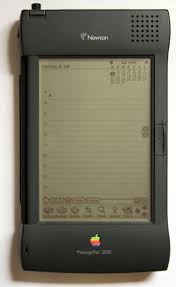
The HP Slate 500 reminds me of my old Newton MessagePad

There's something about the HP Slate 500 that reminds me of my old Newton MessagePad (which Apple killed back in 1998). Like the Newton, the HP Slate 500 is simple. It uses a pen and has handwriting recognition through an active digitizer (which results in much better pen-based computing). The HP Slate 500 also comes with a nice portfolio case, and maybe this is why the Slate reminds me of the Newton. I had a variety of cases for my Newton. Almost every case was made by a third party vendor and some were built really well. I still have some of those cases made by companies like E&B Cases, the Newt Boot, and others.

Since the HP Slate 500 has a built-in active digitizer, will it revitalize pen-based computing? Or, will people mainly use it for touch computing?

Wednesday, March 10, 2010

The evolving tablet PC for the health care industry

When some of the first tablet PCs came out, they were heavy and expensive. Some are still heavy and expensive, but the tablet PC market has certainly shrunk. Slate tablet PCs are rare and we see the vast majority of people using laptops or convertible tablets. Several U.S. medical schools require medical students to use a Lenovo ThinkPad X200 tablet PC. Sorry, but if you're an Apple fan, you'll need to use a PC if you're in one of those schools.

So, how has the tablet PC evolved in the health care industry?
  • One of the major changes occurred when we lost the Apple Newton MessagePad.  Doctors (early adopters of technology) who used the Newton were devastated. What do we use now?
  • Some physicians tried using slate tablets, but at the time, many electronic health record (EHR) software solutions were not really optimized for tablets and pen-based input. 
  • Some manufacturers created slate-style tablet PCs that detached from a keyboard base. Remember the HP TC1000 and TC1100?
  • Then, physicians turned to convertible tablets, but most physicians simply used these as laptops because they were more comfortable with the keyboard and mouse.
  • Then, nurses and other clinicians started using Mobile Clinical Assistants in the hospital setting. These devices were versatile, thanks to their built-in RFID and barcode scanners. The Motion C5 and Panasonic H1 became quite popular, despite their high price tags.
  • Many PC manufacturers gave up on the slate tablet industry. It was simply too niche. 
  • Additional PC manufacturers gave up on the convertible tablet industry.
  • The concept of the ultra-mobile PCs flopped.  The origami campaign was dead.
  • Then, netbooks started gaining popularity and Asus created a convertible tablet netbook.
  • Lenovo introduced a hybrid tablet/notebook with the IdeaPad U1 hybrid.
  • HP teased the world with the HP Slate.
  • Now, Apple (and others like HP and Lenovo) may be revolutionizing the slate industry by introducing slate-style devices like the iPad. If health care professionals start becoming more comfortable with a slate form factor, will this translate over to pen-based computing? Will we be more inclined to navigate directly on the screen of a device instead of using a mouse and keyboard?
I believe that tablets will gain tremendous traction in the healthcare industry. Once physicians realize that they can be much more productive by navigating directly on the screen, they will be inclined to switch to touch/pen-based computing.

Thursday, February 18, 2010

Samsung releases a pen-enabled eReader in Korea

Samsung has released a pen-enabled e-Reader in Korea. It's not a Kindle. It's not an iPad.  After seeing this picture, memories of the Apple Newton came flooding back. I really miss using the Newton. I loved the fact that I would write (or ink) my notes on the screen. I loved the fact that it had robust battery life (AA batteries).

Since the Apple iPad uses a capacitive touch screen, it's not designed for traditional pen-enabled inking and handwriting recognition.

Will handwriting recognition be a standard feature found in future e-readers?

Thursday, January 21, 2010

Apple iSlate vs. Newton

Once the Apple iSlate comes out, I'll be very eager to do a little "iSlate vs. Newton" comparison. I'm sure others will compare these devices as well, but who still has an old Newton MessagePad 2100? I do.

Here's my preliminary iSlate vs. Newton comparison:

I bet the Newton will beat the iSlate in these areas:
  • battery life
  • handwriting recognition
  • novel and innovative apps designed before anyone had a smartphone like the iPhone
  • cases and peripherals (like the external keyboard, the different types of PC card accessories, etc.)
  • memory expansion capabilities (who still uses Flash PC cards?)
  • ability to change/swap batteries
The iSlate will beat the Newton in these areas:
  • color screen and graphics
  • wireless communications
  • processing power
  • total # of apps (including useful and useless apps)
  • multi-touch gestures
  • price
I'm eager to see what the iSlate looks like.

Thursday, January 14, 2010

My favorite mobile computer (Newton MessagePad)


I think my favorite mobile computer will always be the Apple Newton MessagePad. It really is a shame that Apple killed this wonderful product line many years ago. Just think of what could have happened with the Newton!

Maybe the iSlate will make up for it. Let's wait and see as January 26 rolls around. Will the rumors come true? Will the Apple tablet be a top seller in 2010?

Saturday, August 1, 2009

Will OQO get acquired?


Jenn at pocketables.net wrote about how OQO might be acquired by the Chinese distributor known as AudioTone. Then, she updated her post by indicating that Picasso (the OQO Talk forum moderator) told her that these are old rumors that have dissolved. So, what's the truth? Does OQO have a chance at survival? It's too bad the major players like Samsung or HTC don't acquire this great technology. It appears that the OQO will suffer the same fate as the Apple Newton Messagepad. Long live the Newton and OQO! I hope that my OQO lives a long life. Although my Newton still works, I don't use it because the grayscale screen just isn't very practical these days. The OQO can always become a small digital picture frame at the least.

Monday, July 27, 2009

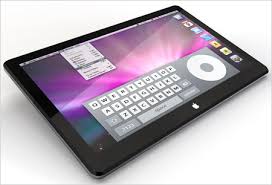
Apple Tablet or Giant iPod?


There have been rumors about an Apple Tablet for quite some time (I'm not referring to the Newton Messagepad), but now we seem to be hearing rumors about a giant iPod running the same operating system as the current iPod touch. People are calling the iPod touch the "iTouch" and I wonder if Apple will take that term and create a giant iPod touch (maybe they'll still call it the iTablet). Or the iPod touch G (G = Giant).

Sunday, July 26, 2009

Apple Tablet on Verizon Wireless?


There have been so many rumors about the Apple Tablet that I don't know what to believe anymore. However, the most recent rumor from PC World suggests that there may be an Apple Tablet on Verizon Wireless. Maybe it'll just be an iPhone that's not called an iPhone. Maybe it will actually be a larger device that has a bigger screen and an operating system that resembles the Newton Messagepad. Who knows, right?

Tuesday, June 30, 2009

Why use a tablet PC in the medical world?


A physician friend asked me the other day, "Why do you use a tablet PC? What do you find so appealing about them?" This is a loaded question. After all, why would anyone spend extra cash to purchase a tablet PC if you can get a much less expensive laptop that has virtually the same (or better) capabilities?

Let me try to answer this with a few bullet points:
  • I've been a pen-based computer user since the late 90's when the Apple Newton was around. Keep that in perspective as you read these next points.
  • I love to "ink" or write on the screen and draw figures and diagrams when I'm taking notes. I use different color pens and I can easily circle things and draw arrows to indicate relationships and to mock up flow diagrams. You can't do that on a laptop.
  • When in the hospital/clinic/office setting, the tablet interface is much more personable and less intrusive. I can comfortably hold the tablet in my hand/arm and I can look at the person in the face. People who use a keyboard are often fixated on looking at the screen.
  • I can use the tablet when I'm standing, so it provides tremendous flexibility. With the tablet, you can take notes while you're standing at the bedside.
  • Convertible tablets are notebooks, so I get a full keyboard when I need it. Or, I can swivel the screen and draw/ink on the screen.
  • When you're in a corporate meeting, you can easily get away with a tablet. It's much more difficult to get away with a laptop.
  • You can be much more efficient when you're navigating an electronic health record (EHR) that's optimized for pen-based computing. You can click on a number of points/buttons so much faster with the pen compared to the mouse. Try it and you'll see what I'm talking about.
  • By using handwriting recognition, I'm forced to constantly improve and maintain a certain quality of handwriting clarity. I can't afford to let my writing deteriorate since I depend on the handwriting recognition that's built into Windows Vista or Windows 7. (XP also has recognition, but it doesn't compare to Vista or 7).
  • You can use your tablet PC to show patients diagrams, pictures, etc. It's so easy to view something on a slate - which is why e-readers like the Amazon Kindle are so popular.
  • I do a lot of reading on my tablet PC. It's so natural to use the pen to scroll and "flip" through pages. I can comfortably hold the tablet in my hands and read it like a book. Who needs the Amazon Kindle when you have a full PC in your hands?
  • I don't travel very much these days, but a tablet PC can be invaluable if you're on a plane and the person in front of you reclines and diminishes your workspace. You can either place the laptop directly on your lap and do your best to continue working, or you can pick up a convertible tablet and hold it in your hands and continue working in pen-mode.
So, there are some of the reasons why I use a tablet PC. We see drug representatives using tablet PCs to detail physicians with drug charts, animations, graphs, and other sources of multimedia. The tablet PC is a powerful interface and when you get a convertible tablet, you combine the best of two worlds.

Tuesday, June 9, 2009

When Will We See the Apple Tablet?


I was really hoping that we'd be hearing about an official Apple Tablet computer at WWDC 2009. I'm not interested in the Axiotron ModBook. That thing is simply too thick and heavy. Unfortunately, it does not appear like we'll be seeing it anytime soon. So, I'm left running Windows Vista and Windows 7 and hoping that Apple somehow miraculously revives the Newton Messagepad and brings life to a color, touch-screen tablet computer that we could have only dreamed of back in the early nineties.

Monday, May 18, 2009

What's Your Favorite Gadget?


I love gadgets. I blame that on my MIT education. I just fell in love with technology at MIT. That's why I like to write about medicine and technology.

What's your favorite gadget? I'd have to say that my favorite is the Apple Newton Messagepad 2100. Why? Because it was so innovative for its time. It had a processor that was much faster than most processors found in laptop computers. Plus, the handwriting recognition was unbelievable! It used standard AA batteries, so I even traveled to China with my Newton because I knew that I wouldn't have any problems finding AA batteries.

So, what's your favorite gadget? I'm willing to bet that many young people would say the Apple iPhone. Some may even remember the days when Sony came out with the original "Walkman" (yes, I had one of those).