Sunday, February 28, 2010

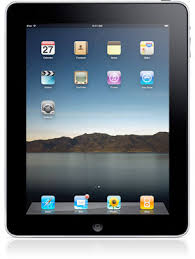
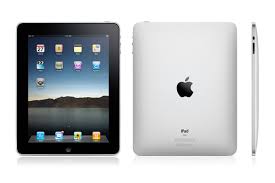
Win an Apple iPad at #HIMSS10!

I may not be giving away an iPad, but I know that at least one company will give away an Apple iPad at HIMSS10.

Stop by Orchestrate Healthcare's booth 6141 at HIMSS and register to win an iPad.  You can learn more about Orchestrate Healthcare by visiting: http://www.orchestratehealthcare.com/

    * Integration (EMR Integration, Clinical & Business Application Integration, Device Integration)
    * EMR Consulting Services
    * Epic
    * Cerner
    * Eclipsys
    * MEDITECH
    * Siemens
    * GE Centricity
    * McKesson
    * Many Ambulatory EMR's: EpicCare Ambulatory, NextGen, Allscripts, eClinicalWorks and many other CCHIT Certified EMR's.
    * Healthcare Information Exchange (HIE): whether with a RHIO/HIE or a more generic external trading partner
    * Web Services, integration-as-a-service, and Service Oriented Architecture (SOA)
    * Clinical Data Exchange: e-Rx, e-Lab, CCR
    * Payer / Provider Connectivity (e.g. better integration and automation of 835 and EOB processing) and other Revenue Cycle Transactions (e.g. point-of-service)
    * EMPI - Enterprise Master Person/Patient Index
    * Technical Staff Augmentation
    * Many Other "Best in KLAS" Technical Services

So, who else is giving away an iPad at HIMSS10?

Saturday, February 27, 2010

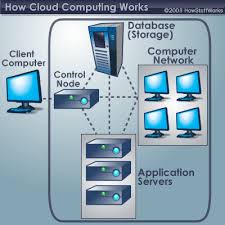
Cloud Computing at #HIMSS10

While I'm at HIMSS10, I'll be computing on the clouds on several levels:
  • I'll be computing while I'm flying to Atlanta (so, I'm literally in the clouds, but this is not the right way for me to be using the phrase "Cloud Computing")
  • I'll be relying on certain Cloud Computing resources (don't wish to get into specifics right now)
  • I'm sure I'll see many vendors and exhibits focused on Cloud Computing in health IT while I'm roaming the exhibit space at HIMSS10
Cloud Computing is gaining tremendous popularity in the health IT space and I'm eager to hear the discussions around this topic at HIMSS10.  Software-as-a-service (SaaS) is simply one type of Cloud Computing and I'm sure we'll see plenty of examples of EHR vendors talking about SaaS. Is the health IT industry ready to tackle the challenges associated with data security, disaster recovery, privacy, and some of the other hot topics related to Cloud Computing?

Friday, February 26, 2010

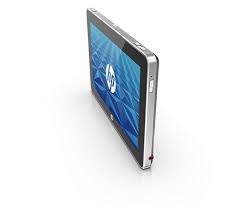
HP Slate vs. Apple iPad

I really wish I could compare the HP Slate against the Apple iPad. I'm sure others will compare these 2 devices, but I plan to approach the comparison from the health care perspective.

I believe the HP Slate will be a fully functional Windows 7 tablet PC. In some ways, it will remind many users of the Motion Computing LS800 small slate tablet PC (I doubt many people had this device because it was so expensive).

The Apple iPad runs the same OS found on the iPhone and iPod touch, so unless Apple releases an iSlate or an iTablet that runs Mac OS X, it won't be a fair comparison to put the iPad up against the HP Slate. Then again, it's probably too premature for me to make these types of statements.

I'm also eager to see what types of devices I'll see at HIMSS10 next week. Make sure to follow all my blogs since most of my HIMSS-related blogs will get published on MedicineandTechnology.com

Thursday, February 25, 2010

Fujitsu LifeBook UH900 vs. Sony Vaio P

Thinking about getting a really small PC? How about a tiny PC? Well, maybe you've been playing with the Sony Vaio P series at your local Sony store. If you want something that's even smaller, then you may want to look at the Fujitsu LifeBook UH900.

At Pocketables.net, you can see some great photos comparing the Fujitsu LifeBook UH900 vs. Sony Vaio P. So, if you thought the Vaio P series had a small keyboard, think again!  Image source: pocketables.net

Wednesday, February 24, 2010

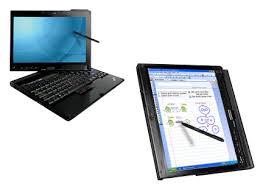
Lenovo updates the ThinkPad Tablet X201T

You won't find the ThinkPad X201T Tablet on the Lenovo website yet, but you'll see it soon. The updated ThinkPad X201 Tablet PC will have a trackpad in addition to the pointer stick. It will also feature the Intel low voltage Core i7 CPU. You'll have the option of a capacitive touch screen (for multi-touch gestures). There are times when I wish my ThinkPad tablet had a capacitive touch screen, but then again, there are times when I'm glad I can tap on the screen with something passive. There's simply no way to keep up with the latest technology.

Tuesday, February 23, 2010

Do you plan to get an Apple iPad?

I'd be really tempted to buy an Apple iPad if the price was significantly lower (say by $100-200). I can't justify the purchase at the current price and I'm hoping (probably dreaming) that Apple will reduce the prices on the iPad to punish early adopters and to succumb to industry pressure placed by other hardware manufacturers like HP and Lenovo. After all, HP is releasing a "Slate" this year and it will probably be priced lower than the iPad. Lenovo has an exciting hybrid tablet (IdeaPad U1 Hybrid) that has definitely captured my interest.

So, do you plan to buy an Apple iPad? I know several people who have signed up and they'll probably be the first ones at the stores. I know more people who are "undecided" at this point. I'm not in such a hurry because I'd rather wait and purchase a second generation iPad (if I ever decide to buy an iPad because I don't think I'll ever justify such a purchase at the current price, but let's wait and see what happens). Of course, by then Apple may be getting ready to release a fully-functional tablet called the iTablet (or maybe even the iSlate) and revive these names that we thought were dead. Maybe the next iPad will come with an active digitizer and a stylus pen (in addition to a multi-touch capacitive screen).

There's no doubt that the iPad is a great piece of technology and I'm sure it will revolutionize the world of mobile computing. I'm an early adopter, but I already have too many early gadgets. Maybe I'll be really lucky this year and win an iPad in some type of raffle.

Monday, February 22, 2010

MIT's Sketch-Interpreting Software

MIT students are full of innovation, aren't they? The latest in the world of tablet computing is sketch-interpreting software. We already have handwriting recognition, but how about sketch recognition? Listen to this:
If a chemist, for example, uses a stylus — an inkless plastic pen — to draw a molecule on a tablet computer, the software can identify different types of chemical bonds and element symbols and determine the structure of the molecule. Similarly, if an electrical engineer draws a circuit diagram, the software will identify the circuit's separate components — like resistors, capacitors, batteries, and simple wires — and display them in different colors. Other applications of the system include programs that can interpret mechanical drawings, family trees, and diagrams of computer programs.
Sounds amazing, doesn't it?  Read about this on the MIT News website by clicking here.

Sunday, February 21, 2010

I really wish the iPad came with a digital pen (stylus)

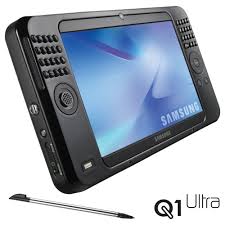
I wish the iPad came with a pen. It would be the perfect gadget for jotting notes during a meeting. I would love to trade my Samsung Q1 Ultra for an iPad if the iPad screen included an active Wacom-enabled (penabled) digitizer that allows one to use a stylus pen and "write" on the screen. I've been a huge fan of "inking" and that really began with the old Apple Newton Messagepad series.

So, will Apple eventually release an iPad that includes a stylus pen? At that point, it would really be a tablet and it wouldn't be a pad anymore. Maybe Apple plans to use the name iTablet in the future for a new device that will incorporate a robust operating system, an active digitizer, and all the other missing features that are not currently found on the iPad (like a USB port, an SD slot, a webcam, a kickstand, a removable battery, a video port, and more...)

Thursday, February 18, 2010

Which computer(s) should I take to #HIMSS10?

I'll be walking all over the place while I'm at HIMSS10 so I don't want to carry a really heavy bag. I'm debating between my Samsung Q1 Ultra UMPC + keyboard, or my Lenovo ThinkPad X200 tablet PC. I often travel with both, but I doubt I'll take both for HIMSS. I'll also have my smartphone and my iPod touch.

I can effectively blog while I'm at HIMSS on almost any machine that has a decent keyboard. The problem with the Q1 Ultra is that it's so slow that I won't be very productive when I'm trying to get some work done at night. I love my ThinkPad, but it's significantly heavier than my Q1 Ultra UMPC (Ultra-Mobile PC). Does anyone still use the phrase UMPC anymore? 

Stay tuned to find out which computers and gadgets I ultimately end up taking to HIMSS10!

Samsung releases a pen-enabled eReader in Korea

Samsung has released a pen-enabled e-Reader in Korea. It's not a Kindle. It's not an iPad.  After seeing this picture, memories of the Apple Newton came flooding back. I really miss using the Newton. I loved the fact that I would write (or ink) my notes on the screen. I loved the fact that it had robust battery life (AA batteries).

Since the Apple iPad uses a capacitive touch screen, it's not designed for traditional pen-enabled inking and handwriting recognition.

Will handwriting recognition be a standard feature found in future e-readers?

Tuesday, February 16, 2010

BusinessWeek dissects the Apple iPad

The February 22 issue of BusinessWeek magazine has an interesting price analysis of the new Apple iPad. It's no surprise that the iPad is more than the sum of its parts by $270. That's right. By the time you look at the parts-price gap on its base $499 model, the difference is around $270 according to iSuppli (a research firm quoted by BusinessWeek magazine). I agree that many people will go out to buy the Apple iPad, but will the reviews be overwhelmingly positive, negative, or mixed?

Sunday, February 14, 2010

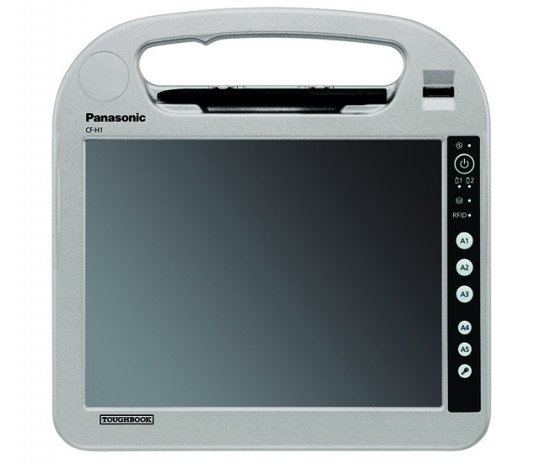
Panasonic Toughbook® H1 Field (Rugged Tablet)


Panasonic Introduces Toughbook® H1 Field – World’s Most Rugged Handheld Tablet Computer

Exceptional Durability and Integrated Features Create Compelling Solution for Mobile Workers
SECAUCUS, N.J.--(BUSINESS WIRE)--Panasonic Computer Solutions Company, manufacturer of durable, reliable Panasonic Toughbook® mobile computers, today introduced the Panasonic Toughbook H1 Field, the world’s most rugged handheld tablet computer. The new device enables extreme mobility and productivity for field sales personnel, first responders, supervisors, inspectors, maintenance workers and other highly mobile professionals. Certified to meet IP65* and MIL-STD-810G* – with a six foot drop rating – the Toughbook H1 Field offers the durability expected of Toughbook mobile computers, so users have the confidence to work in the most demanding conditions. With optional SmartCard, RFID, and barcode readers, camera, GPS and Qualcomm’s new Gobi2000™ mobile broadband technology, the device helps to maximize mobile worker productivity.
“As workforces become more mobile, it’s critical to empower them with the right tools”

Wednesday, February 10, 2010

One in Five Physicians Likely To Purchase an iPad

One in Five Physicians Likely To Purchase an iPad, More than 60 Percent Intrigued By New Device According to Epocrates Survey 

SAN MATEO, Calif.--(BUSINESS WIRE)--Epocrates, Inc., today announced its top-ranked clinical reference application for the iPhone® and iPod® touch devices will be customized for the new iPad™ computer tablet. The iPad is already receiving a warm reception from the healthcare industry with nearly 20 percent of clinicians expressing plans to purchase in an Epocrates survey conducted days after the Apple announcement.

“By optimizing our software for the iPad, we are capitalizing on the larger screen real estate and interactivity provided by this sophisticated device. We are committed to providing the most productive experience at the point of care, keeping physicians informed and focused on the patient rather than searching for answers”

“By optimizing our software for the iPad, we are capitalizing on the larger screen real estate and interactivity provided by this sophisticated device. We are committed to providing the most productive experience at the point of care, keeping physicians informed and focused on the patient rather than searching for answers,” said Rose Crane, chief executive officer of Epocrates. “We are continuing to explore the advanced capabilities of the iPad and ways it can help Epocrates address the evolving healthcare technology needs.”

In addition to announcing its engineers are using Apple’s SDK to optimize Epocrates’ offerings for the iPad, Epocrates surveyed more than 350 clinicians to gauge their interest in the new tablet. Findings include:

* Nine percent of survey respondents plan to buy the iPad when it was immediately available,
* Another 13 percent plan to buy it within the year,
* Thirty-eight percent of respondents expressed interest in the iPad with the request of more information to solidify their purchase decision.

Epocrates®, the first medical application available using the iPhone SDK, was quickly adopted by medical professionals across the nation. Today, as the most popular medical program in the Apple app store, more than one in five physicians are actively using Epocrates on their iPhone or iPod touch. The majority of Epocrates’ 275,000-plus physician subscribers actively use its free or premium software on a “smartphone” such as an iPhone, Blackberry® or Palm® device.

More than 900,000 clinicians worldwide rely on Epocrates software at the point of care to help improve patient safety and increase efficiencies with fast, reliable access to a host of clinical information, such as drug dosing, health plan coverage and disease treatment guidelines.

ABOUT EPOCRATES, INC.

Epocrates is a leading provider of clinical information and decision support tools to healthcare professionals. Epocrates currently has more than 900,000 healthcare professionals, including one in three U.S. physicians and 40 percent of medical students, in its active network. The company’s subscription-based services enable healthcare professionals to make more informed medical decisions, reduce medical errors and practice more efficiently. For more information about Epocrates, please visit www.epocrates.com/company.

Tuesday, February 9, 2010

Fully Washable Medical Grade Keyboards by HP (#HIMSS10)

At HIMSS10 (Healthcare Information and Management Systems Society), HP will be demonstrating some fully washable medical grade keyboards. I'm looking forward to seeing that! HP will be at Booth # 7761

These keyboards are made by Unotron. Here's an interesting fact:
A study conducted by University of Arizona last year found the average office desktop was home to 400 times more bacteria than the average toilet seat.
So, does that mean that toilet seats are generally kept quite clean or that keyboards are really that filthy? I'm getting really excited to walk through the exhibit section of HIMSS because I think we're going to see some truly innovative products there. 

Monday, February 8, 2010

5 reasons why Apple didn't name the iPad the iTalbet or iSlate

I think I may know why Apple didn't name the iPad the iTablet or the iSlate.  Let me share 5 reasons (these are just my opinion):
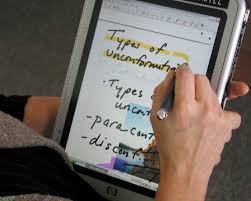
  1. To dedicated tablet PC users, the term "tablet" implies that you should have the ability to use a stylus pen to write on the screen. This is also commonly called "inking" and we often rely on a Wacom-based active digitizer to write, draw, scribble, and erase. Unlike typical tablet computers, the iPad does not have an active digitizer and there is no stylus pen. 
  2. The term "slate" is often used to refer to a tablet PC that lacks a physical keyboard. Hence, the term "slate" could be misleading since people will automatically associate it with a Tablet PC, and this leads to point #1 above (even though HP will be releasing a slate that lacks an active digitizer).
  3. The word "tablet" has too many syllables. Notice how Apple likes to use simple words? We have the iPod. Not the iMP3player. Not the iMultimediaplayer. It's simply the iPod. Hence, the term iPad is short and simple. It fits the Apple culture.
  4. The term "slate" is already being used by HP to describe a small, handheld tablet multimedia computer. Apple wouldn't want to confuse its new iPad with a new produce released by HP, would it? My guess is that they were planning on naming it the iSlate until they discovered that HP was coming out with the "Slate." 
  5. The term "iPad" will subliminally also cross-promote the iPod because the two words are so similar.  In fact, when people talk about the iPad, everyone naturally thinks about the iPod. If Apple had used either iTablet or iSlate, people would not think about the iPod when they hear those terms. When consumers hear "iPad," they immediately think about the iPod. This type of cross-promotion is ingenious!
So, there you have it. What do you think? Agree or disagree?  I still think iNewton would have brought back many loyal users.

Dell Mini 5 tablet (slate) coming soon

Get ready for this Android-powered mini slate tablet called the Dell Mini 5. This video gives you a glimpse of this device. Should this be called a tablet? A slate? An MID or Mobile Internet Device? A PDA or smartphone? Reminds me of the Archos 5 Internet Tablet running Google Android.

Sunday, February 7, 2010

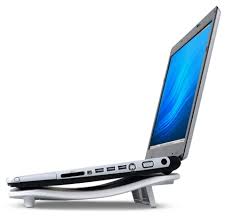
Vantec Lapcool 3 for my ThinkPad X200 Tablet PC

My main laptop/tablet when I'm traveling is the Lenovo ThinkPad X200 tablet PC. This convertible tablet is a great machine for traveling because it's thin and light. It also doesn't generate too much heat, so it's relatively "cool" even if you're not using a cooling pad. However, given that I have a standard hard drive in my ThinkPad, I want to keep the temperatures as low as reasonably possible.

I've been testing various laptop cooling pads and for a thin and light laptop like the X200, the Vantec Lapcool 3 is a really nice cooling pad. I've also tested the Vantec Lapcool 2, the Belkin F5L001, the Targus Lap Chill Mat, and a few others.

Here's why I really like the Vantec Lapcool 3 for my ThinkPad X200 tablet PC:
  1. Compared to the others, this one is very thin and light.
  2. It's powered by a USB cable (most of the others are as well). 
  3. It blows air out the back, so you can have it sit flat on a desk and it still runs very effectively. Others require that you have some free space under the cooling pad.
  4. It's relatively inexpensive ($22 on Amazon).
  5. It's ultra-quiet. Others can be quite loud, even if they are designed with a single fan. 
So, would I recommend the Vantec Lapcool 3 for everyone? No. If you have a larger laptop or one that generates a significant amount of heat, then you should probably use a different cooling pad. 

New rugged mobile computer for the healthcare industry

There's a new rugged mobile computer coming out for the healthcare industry and I plan to blog about it when it gets announced at HIMSS (Healthcare Information and Management Systems Society) in a few weeks. Stay tuned for more details...

Saturday, February 6, 2010

January top 5 posts: MobileHealthComputing.com

Here are the top 5 posts for the month of January (notice how 4 of the 5 deal with Apple's tablet the iPad?):
  1. How the iPad (Apple Tablet) could revolutionize health care

  2. Apple's iPad will be aimed at hospitals

  3. Favorite Windows 7 Feature

  4. Apple iSlate

  5. 10 ways doctors could use an Apple iPad in the office or clinic

Fujitsu LifeBook UH900 Mini-Notebook

For those of you looking for a mini-notebook because you need a keyboard and you don't want to type on the screen of a tablet computer, consider the Fujitsu LifeBook UH900 Mini-Notebook. This tiny little computer is similar to the Sony Vaio P series, but it includes a 5.6" multi-touch screen. The built-in GPS makes this a handy GPS navigator, but I'm not sure I'd spend $850 just for a fancy GPS that happens to run Windows 7.

This small computer includes a 62 GB, solid state drive (SSD) and an Intel® Atom™ Processor Z530.  I wish the screen would fold all the way back so that this device could become a convertible tablet. Well, you can't always have everything.

Friday, February 5, 2010

How doctors and medical students can use the Apple iPad to improve patient education

I think that physicians, nurses, and medical/nursing students have a very unique opportunity to use the Apple iPad to teach patients. Some patients are visual learners, so the use of a portable multimedia device will be an innovative and highly effective way to demonstrate certain critical elements of diseases and conditions. Instead of drawing something on the back of a paper towel, you'll now have access to rich multimedia so that you can educate your patients.

Someday, when patients are waiting in the exam room, they won't have static wall charts. They'll have interactive, multimedia screens on the walls explaining elements of anatomy, diseases, procedures, and much more. Some of this is happening in the waiting rooms and some physicians even have educational screen savers running on the computers that are in each exam room. Now, you can expect to see a docked iPad in every exam room so that the physician or nurse can quickly grab that mobile device to teach the patient. What a powerful patient education tool!

Fujitsu claims it had an iPad in 2002

According to this story on the NY Times, Fujitsu claims it had a product called an iPad back in 2002. It wasn't an oversized iPod touch. It was used in the retail setting to check prices and product inventory. It had a 3.5" touch-screen and it ran on a Windows-based operating system. Apple should have gone with iSlate instead of iPad. 

You can read this interesting story here.

Thursday, February 4, 2010

Medical textbooks on the Apple iPad could revolutionize medical education

I'm sure that some medical schools have their medical students using the Apple iPad as an e-reader for medical textbooks. The Amazon Kindle is a great e-reader, but the lack of a color screen makes it suboptimal for medical students who rely on color-rich diagrams, images, etc. So, this is where the Apple iPad could fill that gap.

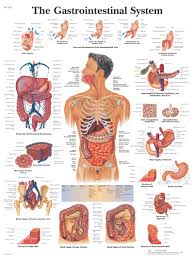
Can you imagine learning anatomy on an iPad? You won't be limited to static images. Imagine having the ability to click on an image, rotate it, zoom in, and then "peel away" layers of body parts. The iPad could be a tremendous learning tool for medical students. The "touch" aspect of the iPad makes this tool much easier to use compared to a laptop.

Imagine this: you click on the heart. Then, you can zoom in to see the actual muscle fibers. Then, you can zoom in even more to see light microscopic images of the heart. Then, zoom in even more, and you're now seeing electron microscope images.  The iPad could link images and videos of gross pathology with microbiology, pathology with physiology, etc. It could truly revolutionize the medical school experience.

Speaking of textbooks, the Wall Street Journal reports that ScrollMotion is collaborating with some major textbook publishers to transform classrooms into "e-classrooms."

Tuesday, February 2, 2010

Rumors about the Google Tablet

Now that Apple has officially released its iPad, the rumors surrounding the first generation Apple tablet will get replaced by new rumors regarding the Google tablet. It appears that HTC is working with Google to create a tablet that will likely run Chrome OS (or maybe it will dual-boot into Android as well). In any case, I suspect that we'll see a real winner since HTC has a long history of making excellent smartphones and other mobile devices. The current Google Nexus One Android smartphone is made by HTC and branded as a Google smartphone. How will the Google tablet compare to the iPad?